Commercial Electronic Door Lock Systems - Advanced Security Solutions for Business

All Categories

commercial electronic door lock

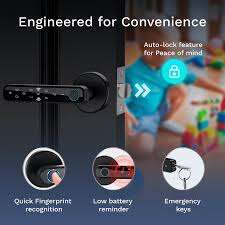
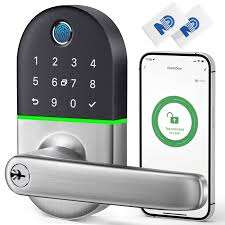
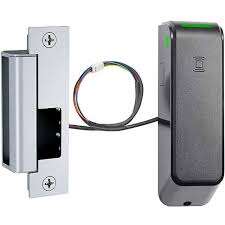
A commercial electronic door lock represents a sophisticated security solution designed specifically for business environments, hotels, offices, retail spaces, and institutional facilities. Unlike traditional mechanical locks that rely solely on physical keys, a commercial electronic door lock integrates advanced technology to provide enhanced security, convenience, and management capabilities. These systems utilize various authentication methods including keypads, card readers, biometric scanners, or smartphone connectivity to grant access to authorized personnel. The core functionality of a commercial electronic door lock centers on providing secure, controlled entry while maintaining detailed records of all access events. Modern systems feature encrypted communication protocols, tamper-resistant construction, and fail-safe mechanisms that ensure continuous operation even during power outages. The technological architecture typically includes a microprocessor-controlled locking mechanism, user interface components, power management systems, and communication modules that enable integration with broader security networks. Commercial electronic door locks serve diverse applications across multiple industries. Hotels deploy these systems to manage guest room access efficiently, eliminating the costs and security risks associated with traditional key management. Office buildings utilize them to restrict access to sensitive areas, track employee movements, and implement time-based access controls. Retail establishments benefit from the ability to grant temporary access to cleaning crews or contractors without distributing permanent keys. Healthcare facilities rely on these locks to protect patient privacy and secure pharmaceutical storage areas. Educational institutions implement them to control building access during off-hours while allowing authorized staff flexible entry. The scalability of commercial electronic door lock systems makes them suitable for single-door installations or enterprise-wide deployments spanning hundreds of access points. Cloud-based management platforms enable administrators to configure permissions, review access logs, and respond to security incidents from any location with internet connectivity, transforming traditional physical security into an intelligent, responsive system.

New Product Releases

The commercial electronic door lock delivers substantial practical benefits that directly impact your daily operations and bottom line. First and foremost, you eliminate the ongoing expenses and logistical headaches associated with traditional key management. No more costs for rekeying locks when employees leave, no emergency locksmith fees when keys go missing, and no time wasted tracking down who has which keys. You simply deactivate credentials instantly through your management system, providing immediate security without physical intervention. The convenience factor transforms how your business operates. Employees no longer fumble with keys while carrying supplies or equipment. Authorized personnel gain entry with a quick card tap, PIN entry, or even hands-free smartphone unlock, streamlining traffic flow during busy periods. For businesses serving customers directly, such as hotels or fitness centers, guests appreciate the modern experience and the elimination of physical key deposits or returns. Your security posture strengthens significantly with a commercial electronic door lock installation. Every entry attempt generates a detailed log showing who accessed which door and exactly when. This audit trail proves invaluable when investigating security incidents, resolving disputes about facility usage, or demonstrating compliance with industry regulations. You gain the ability to implement sophisticated access schedules, granting different people different permissions based on time of day, day of week, or specific date ranges. Cleaning staff might access certain areas only during evening hours, while management retains round-the-clock entry privileges. The system alerts you immediately to potential security concerns such as doors left propped open, forced entry attempts, or unusual access patterns. Integration capabilities extend your investment value beyond basic door security. Your commercial electronic door lock system connects with video surveillance, allowing you to match recorded footage with access events automatically. Integration with building automation systems enables energy savings by adjusting lighting and climate control based on occupancy detected through door access. Human resources systems can synchronize employee data, automatically provisioning or removing access privileges as staff join or leave your organization. Fire safety systems interface with electronic locks to ensure automatic unlocking during emergencies, protecting occupants while maintaining security during normal operations. The durability and reliability of quality commercial electronic door lock products mean fewer maintenance calls and longer service life compared to mechanical alternatives that wear out from repeated key insertion. Battery-powered models continue functioning during power outages, while hardwired versions include battery backup. You receive low-battery warnings well in advance, preventing lockout situations. Remote management capabilities prove especially valuable for multi-site operations, allowing centralized control over geographically dispersed locations without traveling to each facility for routine administrative tasks.

Practical Tips

Thermal Break Aluminum Doors: Features, Benefits, and Buying Tips

13

Mar

Thermal Break Aluminum Doors: Features, Benefits, and Buying Tips

Understanding Modern Architectural Elements in Home Design The evolution of residential architecture has brought forward innovative solutions that combine aesthetics with functionality. Among these advancements, thermal break aluminum doors and windo...
View More
What Makes Custom Thermal Break Aluminum Doors and Windows a Smart Investment for Insulation?

03

Mar

What Makes Custom Thermal Break Aluminum Doors and Windows a Smart Investment for Insulation?

Modern construction and renovation projects demand innovative solutions that deliver both performance and energy efficiency. Among the most significant advancements in architectural glazing, thermal break aluminum windows have revolutionized how buil...
View More
What Self-Cleaning Features in a Smart Toilet Save You Time and Effort on Maintenance?

18

Mar

What Self-Cleaning Features in a Smart Toilet Save You Time and Effort on Maintenance?

Modern bathroom technology has revolutionized how we approach hygiene and maintenance, with smart toilet systems leading the charge in automated cleanliness solutions. These innovative fixtures incorporate advanced self-cleaning mechanisms that signi...
View More
Can a Smart Toilet with an Auto-Open Lid Detect Your Presence and Respond Instantly?

18

Mar

Can a Smart Toilet with an Auto-Open Lid Detect Your Presence and Respond Instantly?

The modern bathroom has evolved significantly from basic functionality to sophisticated technology integration. A smart toilet with auto-open lid represents the pinnacle of bathroom innovation, combining convenience, hygiene, and advanced sensor tech...
View More

Get a Free Quote

Our representative will contact you soon.
Email
Name
Company Name
Message
0/1000

commercial electronic door lock

Advanced Access Control and Customizable Security Permissions

Advanced Access Control and Customizable Security Permissions

The commercial electronic door lock revolutionizes how you manage security by offering unprecedented flexibility in controlling who accesses your facilities and when those privileges apply. Traditional lock and key systems operate on an all-or-nothing principle where possessing a key grants unlimited access regardless of time or circumstances. Electronic systems transform this paradigm by enabling granular permission structures tailored to your specific operational requirements. You can create distinct user groups with varying authorization levels, ensuring employees access only areas relevant to their responsibilities. A retail manager might have access to the sales floor, stockroom, and office areas, while sales associates reach only customer-facing zones and break rooms. Cleaning contractors receive permissions limited to after-hours periods, automatically activating at closing time and deactivating before opening. Temporary credentials serve vendors or maintenance technicians for single-day access that expires automatically without requiring you to remember to revoke permissions manually. The commercial electronic door lock system maintains these complex permission matrices effortlessly, eliminating human error from access management. Schedule-based access restrictions enhance security without creating operational friction. Your facility might remain locked to general staff overnight while allowing security personnel and senior management unrestricted entry. Weekend access could differ from weekday patterns, reflecting your actual business rhythms. Holiday schedules adjust automatically based on your calendar, preventing the confusion that occurs when someone forgets to unlock doors on irregular workdays. Anti-passback features prevent credential sharing by detecting when a single card attempts entry at multiple locations without proper exit scans between uses. Visitor management integrations allow reception staff to issue temporary credentials instantly, creating professional first impressions while maintaining security protocols. The audit capabilities inherent in commercial electronic door lock technology provide accountability that mechanical systems simply cannot match. Every access attempt, whether successful or denied, creates a permanent, tamper-proof record including user identity, door location, precise timestamp, and access method used. These logs become invaluable during security investigations, helping you understand exactly how incidents occurred and who was present during relevant timeframes. Compliance requirements in healthcare, finance, and other regulated industries often mandate such detailed access records, making electronic locks not just convenient but necessary. You can generate reports showing access patterns, identifying unusual behaviors such as after-hours entries by personnel who normally work day shifts, or frequent access to sensitive areas by individuals whose roles do not require such presence. These insights enable proactive security management rather than reactive response after breaches occur.
Seamless Integration with Modern Business Technology Systems

Seamless Integration with Modern Business Technology Systems

A commercial electronic door lock functions as more than an isolated security device; it serves as a connected component within your broader technology ecosystem, multiplying its value through integrations that enhance overall operational efficiency. The ability to interface with existing business systems transforms physical access control from a standalone function into an intelligent capability that responds to and informs other business processes. Integration with human resources management systems exemplifies this synergy perfectly. When your HR department onboards a new employee, their information flows automatically to the access control system, provisioning appropriate credentials without requiring separate data entry or coordination between departments. Their first day begins smoothly with functional access to necessary areas rather than waiting while IT staff manually configure permissions. Similarly, when employment ends, the HR termination workflow triggers immediate credential deactivation, eliminating the security gap that occurs when off-boarding tasks are handled sequentially rather than simultaneously. This synchronization prevents the common scenario where former employees retain building access for days or weeks after departure because someone forgot to notify security personnel. The commercial electronic door lock system maintains consistency between your HR records and actual facility access automatically. Video surveillance integration creates powerful investigative and monitoring capabilities by correlating visual records with access events. When someone uses credentials to enter a restricted area, the system can automatically bookmark the corresponding video footage, making it instantly retrievable without searching through hours of recordings. If an access denial occurs, perhaps because someone attempts entry with expired credentials, security personnel immediately see video of who made the attempt and can respond appropriately. This correlation proves essential during incident investigations, allowing you to review not just who accessed an area but what they did while inside, who they met, and what items they carried in or out. The commercial electronic door lock acts as a trigger for intelligent video recording, capturing footage only when access events occur rather than recording continuously, reducing storage requirements while maintaining security oversight. Building automation connections deliver tangible energy savings and enhanced occupant comfort. Your commercial electronic door lock system informs the building management system about occupancy, enabling intelligent control of lighting, heating, and cooling based on actual facility usage rather than fixed schedules. When the first employee enters in the morning, environmental systems activate automatically in relevant zones. When the last person exits and locks up, energy-consuming systems scale back to unoccupied settings without requiring anyone to remember to adjust controls manually. Conference rooms and private offices can implement presence-based automation where lighting and climate control activate only when someone with appropriate credentials enters, eliminating waste from spaces left conditioned when empty. Alarm system integration ensures coherent security operations where your commercial electronic door lock system communicates with intrusion detection equipment. Armed alarm systems can automatically unlock designated egress doors during emergencies while keeping perimeter doors secured. Access attempts at unusual hours trigger additional scrutiny, perhaps requiring secondary authentication or alerting security personnel to verify legitimacy.
Enhanced Durability and Long-Term Cost Efficiency for Business Operations

Enhanced Durability and Long-Term Cost Efficiency for Business Operations

Investing in a commercial electronic door lock delivers substantial financial advantages over the lifetime of the system, despite potentially higher initial costs compared to mechanical alternatives. The total cost of ownership calculation must account for ongoing operational expenses, maintenance requirements, security incident costs, and administrative labor that traditional systems impose continuously. Electronic solutions eliminate or dramatically reduce these recurring costs while providing superior performance and reliability throughout their extended service life. The durability of quality commercial electronic door lock products reflects engineering specifically for high-traffic business environments where doors experience dozens or hundreds of daily operations. Commercial-grade components withstand constant use without the wear patterns that plague mechanical cylinders subjected to repeated key insertion and turning. Traditional lock mechanisms gradually wear, creating loose, unreliable operation that requires eventual replacement. Keys themselves wear down, bend, or break, creating user frustration and replacement costs. Electronic authentication eliminates these mechanical wear points entirely. Keypads, card readers, and biometric scanners handle thousands of authentication cycles without degradation. Motorized locking mechanisms operate under microprocessor control with precision that minimizes mechanical stress, extending component life significantly beyond mechanical alternatives. The administrative cost savings from a commercial electronic door lock system accumulate substantially over time. Traditional key management imposes hidden costs that become obvious only when calculated comprehensively. Each key duplication represents a small expense, but multiply that by hundreds of keys over years of operation, adding the labor time for tracking who has which keys, and costs mount quickly. Employee turnover in traditional systems necessitates rekeying to maintain security, with each rekey event costing hundreds of dollars in locksmith fees plus the administrative burden of distributing new keys to authorized personnel. Electronic systems eliminate these expenses entirely through instant credential management. Adding a new user requires only seconds of administrative time through your management software. Removing access takes even less effort, with immediate effect across all connected doors. No physical items require collection, replacement, or distribution. The security cost avoidance represents perhaps the most significant financial advantage of commercial electronic door lock technology. Security breaches resulting from lost keys, unauthorized key duplication, or failure to rekey after employee departures can impose enormous costs through theft, liability, or regulatory penalties. Electronic systems virtually eliminate these risks through superior access control and comprehensive audit trails. When security incidents occur, the detailed access logs provided by your commercial electronic door lock system enable rapid investigation and resolution, minimizing impact and preventing escalation. Insurance providers often recognize this superior security posture through reduced premiums for facilities with electronic access control. Energy efficiency contributions from building automation integration generate measurable utility cost reductions, with the commercial electronic door lock system serving as an occupancy sensor that informs intelligent environmental control decisions. The return on investment timeline for commercial electronic door lock installations continues shortening as technology costs decline while traditional locksmith services become more expensive and administrative labor costs rise with wage inflation.


Get a Free Quote

Name
Email
Mobile/WhatsApp
Country
Required product types
Approximate project budget or area
0/1000

Get a Free Quote

Name
Email
Mobile/WhatsApp
Country
Required product types
Approximate project budget or area
0/1000